
We are all on a mental health spectrum
Can this programme help me?
A very common question that I get asked. My response is usually, ‘Do you have mental health?’. The response is usually a little confused and sometimes surprising! It’s important to understand:
1) Sometimes when the term ‘mental health’ is mentioned, people think you must be suicidal, or struggling to function, to relate with it
2) We all have mental health, just like we all have physical health. We are all on a mental health spectrum (see below).
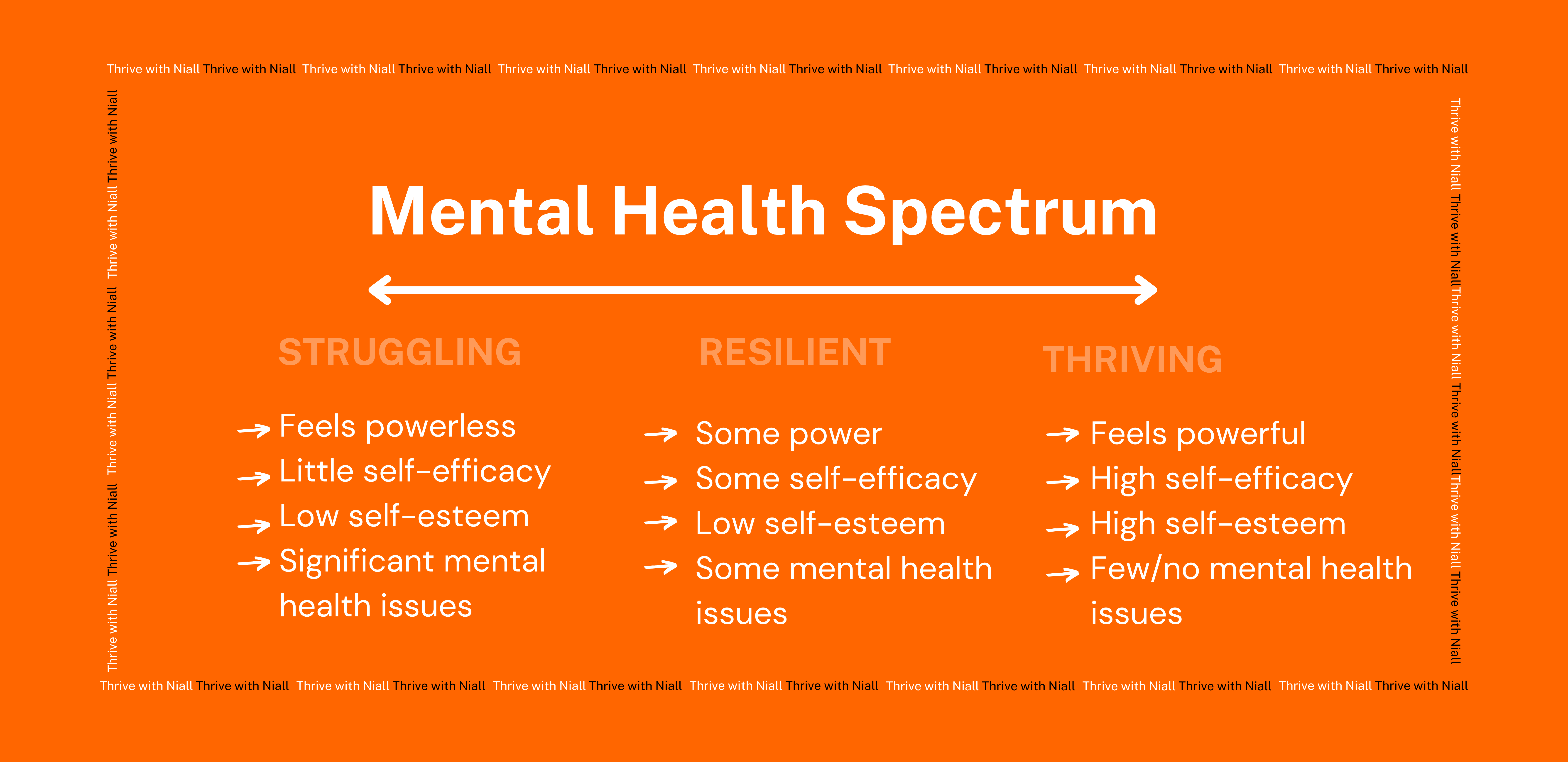
There are, currently, 7.75 billion people in the world, and each of us are on this spectrum. Although you may not be struggling, depressed or anxious, it doesn’t mean you are thriving, in control of your mind and living your best life. I often hear from my clients that are completing the programme with their significant other (this tends to be a mum, dad, brother, sister etc), how, even though they didn’t attend the programme specifically for themselves, or with a problem, they are finding it hugely fascinating and beneficial. Again, that’s because we all have mental health and the education and skills relate to every one of us. We all have beliefs, thoughts, coping skills, self-esteem and thinking styles. However, most of us haven’t learned HOW to manage these processes well and learn to thrive (an understanding of what a thriving person looks like is explained under the What is thriving heading).
Ordinarily, there is usually a proactive approach into prevention rather than reaction. For example, most people brush their teeth rather than waiting until their teeth are black and rotting. Most people clean, and service, their car rather than wait until it breaks down. With mental health, however, culturally the focus tends to be on reacting after a negative event, and minimising symptoms, rather than learning the skills into how to take control of your mental health, and preventing symptoms from occurring in the first place, or overcoming them.
Are you on the ‘struggling’ side of the mental health spectrum?
It is very common for people who are currently struggling with their mental health, to doubt whether The Thrive Programme®, or anything else will work for them. This scepticism will only increase if there are many failed attempts of therapy, counselling, or other interventions. With each failed attempt you become more and more powerless to the point where you are close to giving up, believing you are stuck like this forever.
Whilst I completely understand this viewpoint, it is REALLY important you have an in-depth look into The Thrive Programme®, by watching testimonials, reading reviews and feedback from people that have completed it. These people were, very likely, in a similar position you are today. To reiterate, this programme is not like anything else you’ll have done before, so, although after interventions haven’t worked for you, that doesn’t mean this programme won’t.
Generally, the reasons why people have a presenting symptom, whether it be depression, anxiety, panic attacks, fears, phobias, eating disorders, emetophobia (fear of being sick), sexual problems or any of the symptoms listed below, is very predictable.
Symptoms don’t happen ‘to’ you, they are inadvertently created by you, by your unhelpful, powerless thinking
We all have approximately 25 or 26 different psychological processes - belief systems, thinking styles, attitudes, behaviours that make our psychological functioning. I call these your ‘Mental Health Ingredients’. How you manage these thinking styles will, essentially, determine our state of our mental health.
Generally, the symptoms, feelings, emotions that you have, are NOT just happening ‘to’ you randomly, outside of our control, like it may seem. These symptoms that you develop are, inadvertently of course, determined by how you manage your thinking styles (unhelpful, powerless beliefs systems, thinking styles and cognitive processes).
By learning HOW to manage these ‘mental health ingredients’ in a powerful, helpful way, your symptoms very quickly lessen and fade away. Think about it, why would you get anxious about driving if you were confidence in your ability to drive? Or, why would anyone get depressed if they felt powerful and in control of their lives?
The symptoms are a result, of poor unhelpful beliefs and thinking styles, hence why when we resolve these unhelpful areas, and create more powerful processes, this enables you to take control of your emotions, feelings, symptoms, attitudes, behaviours and reactions.
Anybody can overcome these symptoms, take control of their mental health and learn to thrive, once they are educated and coached how to do so. There are many videos/reviews on this website and my social media platforms which illustrates this.
Get in touch today to book a free introductory consultation, via zoom. During the consultation, if I wasn’t confident in success, or deduced the programme didn’t suit you, for whatever reason, I wouldn’t consider starting. Both parties must be comfortable and happy before proceeding.

- Quit smoking
- Alcohol abuse
- Drug abuse
- Gambling
- Nail biting
- Cocaine Abuse

- Anorexia
- Bulimia
- Binge eating
- Lose weight
- Dieting
- Slimming

- Being sick (Emetophobia)
- Flying/trains
- Spiders (arachnophobia)
- Lifts/enclosed spaces
- Heights
- Cancer, death or illness

- Panic attacks
- Anxiety attacks
- Stress at work
- Excessive sweating
- Panic disorder
- Feeling overwhelmed
- Teeth grinding (bruxism)
- Self harm
- Hair pulling (trichotillomania)

- Shyness
- Blushing or fear of blushing
- Feeling embarrassed or uncomfortable in front of others
- Stammering/stuttering
- Shy bladder (unable to pee in front of others)
- Fear of public speaking
- Persistent fear of failure

- Irrational fears
- Difficult behavour
- Shyness, worry & anxiety
- Confidence
- Speech problems
- Unhappiness
- Emotional trauma
- Bed wetting
- Nightmares & sleeping problems

- Low self confidence
- Low self esteem
- Exam nerves
- Driving test nerves
- Assertiveness
- Public speaking

- Premature ejaculation
- Impotence
- Sexual Inhibitions/frigidity
- Vaginismus
- Fear of intimacy
- Fetishes

- Anger
- Grief
- Guilt
- Depression
- Unhappiness
- Worry